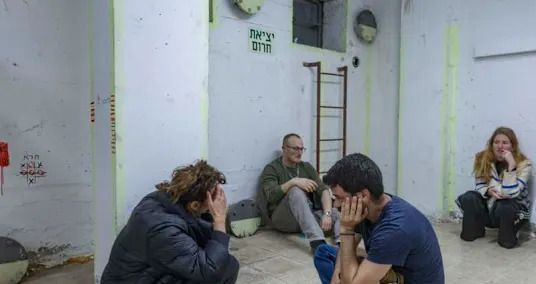
The data reflects the feelings of the young people participating in the survey, but paints a worrying picture that is mirrored in Aluma’s ongoing work in the field.
Amid the ongoing war and the upheaval it creates in everyday life, the Aluma organization, which works to expand mobility among young people in Israel and to provide support at life's crossroads of service, education, and employment, conducted an internal survey among 237 young men and women it supports. The results point to a severe and deepening crisis beneath the radar.
The data reflects the feelings of the young people participating in the survey, but paints a worrying picture that is mirrored in Aluma’s ongoing work in the field.
According to the data and Aluma’s work, many young people feel that the government does not see them and does not provide a sufficient response to their needs.
Only 3% of respondents felt that the state cares about the future of young people in Israel, whereas 74% stated that they feel that the state does not see them and does not care about their future at all, or only to a small extent.
The main impact is in the field of education, according to Aluma’s findings, with 64% of young people reporting damage or freezing of their academic plans due to the war, and 45% listed education as their primary concern.

About a quarter of those surveyed stated that they are especially worried about their economic situation.
Growing instability, diminishing optimism
At the same time, the feeling of instability is growing. A majority of the young people surveyed, 57%, reported uncertainty as a description of their feelings about their future in Israel. Only 30% felt optimistic about their future in Israel.
The potential consequences of the situations are already visible, with about 30% of young people surveyed having thought about or considered leaving Israel for an extended period, with 9% of them seriously considering or planning to leave.
Dr. Tami Halamish Eisenman, CEO of Aluma, said that "the young people we meet every day are at the very turning points of their lives - after military service, at the beginning of their studies, on the path to independence. The war caught them there, and we see the impact.”
“As in any crisis, they are the first to be affected and among the last to be talked about. This survey does not surprise us; it confirms what we hear from the field,” Eisenman said.
"The question is not whether there is a problem, but when we start addressing it. Without focused attention, we may find ourselves in a few years with much deeper gaps."
LATEST POSTS
- 1
 The best ice packs for coolers of 2026, tested and reviewed
 - 2New York to require social media platforms to display mental health warnings
- 3Israel's haredi draft crisis: Court ruling and political stalemate reach breaking point
- 44 Electric Vehicle Brands: Execution, Unwavering quality, and Development
- 5Iran's stolen futures: The arrested Iranians at risk of execution by the regime



- NASA set to launch Artemis 2 moon mission today, the 1st crewed lunar flight since 1972
- 7 Powerful Techniques to Boost Efficiency with Your Cell Phone: A Far reaching Guide
- Hamas demanded displaced Gazans pay rent on beach tents amid torrential downpour, IDF reveals
- Indoor Drinking Fountains: Famous Home Advancements during the Pandemic
- A soft launch, an unfollow and a lot of questions: Breaking down the 'Summer House' romance blowing up group chats
- Saturn shines with the waxing moon at sunset on Nov. 29
- The most effective method to Recuperate After a Dental Embed Strategy: A Far reaching Guide
- 41 Young Men Die in South Africa After Circumcision Initiation
- Israel’s 'Stonehenge’ not alone with near 30 similar sites, satellite imagery reveals